




 \n
\n Can You Legally Store IRA Gold at Home? No — Here’s Why
No — home storage of IRA gold is prohibited under IRC §408(m) and constitutes an immediate taxable distribution. Storing IRA gold at home triggers “constructive receipt” under IRC §408(m), which immediately disqualifies the assets from IRA status. home storage gold ira The IRS requires that all IRA-held precious metals be held by a qualified trustee or custodian — defined under IRC §408(a) as a bank, federally insured credit union, or IRS-approved non-bank trustee. A private residence does not meet this definition under any circumstances, including through an LLC or “checkbook IRA” structure.
The IRS reaffirmed this position in IRS Publication 590-A (2024), which states: “The trustee or custodian must be a bank, a federally insured credit union, a savings and loan association, or an entity approved by the IRS to act as trustee or custodian.” A disqualified person under IRC §4975 — including you, your spouse, and lineal descendants — cannot serve as custodian of your own IRA-held metals. Your custodian has a fiduciary duty to ensure metals never leave approved storage.
Gold historically retains purchasing power during inflationary periods — it gained 25.7% in 2020 and 13.1% in 2022 while equities fell. Investors allocating 5–15% of a retirement portfolio to physical gold reduce correlation to equity market drawdowns, according to the World Gold Council’s 2024 portfolio analysis. This diversification must happen through a self-directed IRA (SDIRA) with a qualified custodian — never through home storage.
What the IRS Rules Actually Say: IRC §408 Explained
IRC §408(a) requires a qualified trustee — a bank, credit union, or IRS-approved entity — to hold all IRA assets, including physical metals. Section 408(m)(3) specifically addresses precious metals, permitting gold, silver, platinum, and palladium in a self-directed IRA (SDIRA) only if the metals meet minimum fineness requirements and are held by a qualified trustee at an IRA-approved bullion depository.
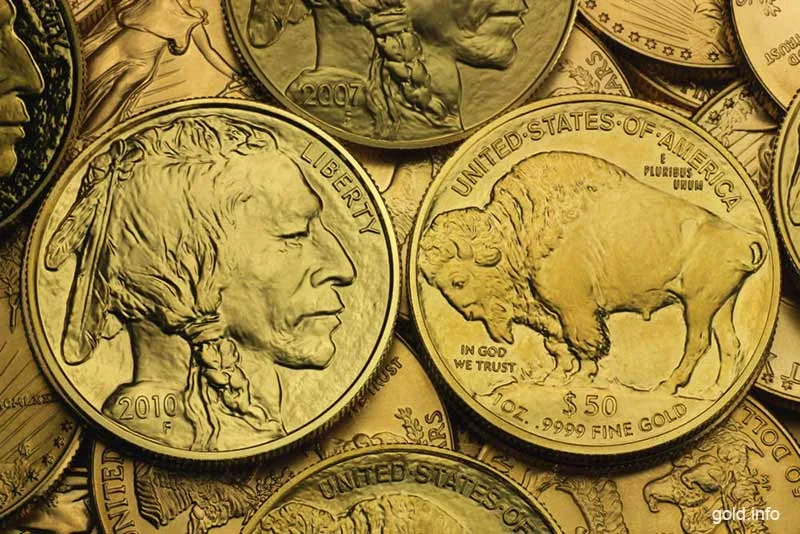
For gold, the IRS requires a minimum fineness of .995 (99.5% purity) for bars — this is the collectibles rule threshold under IRC §408(m)(3)(B). Certain coins are exempt from this threshold. gold ira at home Approved coins include American Gold Eagle coins (91.67% gold, specifically exempted by statute), Canadian Gold Maple Leafs (.9999 fineness), and Australian Gold Kangaroos (.9999 fineness). The IRS prohibits you from holding numismatic coins in an IRA — IRC §408(m) restricts you to IRA-approved bullion-grade coins and bars meeting fineness thresholds. The Andersen case reinforced that coins lacking investment-grade fineness fail IRA eligibility regardless of LLC structure.
The prohibited transaction rules under IRC §4975 bar any disqualified person from engaging in a transaction that provides direct or indirect personal benefit. gold ira home storage When you store IRA metals in your home, you violate these rules because you gain personal access to and control over plan assets. The IRS treats your entire IRA balance as a distribution on January 1 of the year the prohibited transaction occurred — a severe penalty that can reach six figures.

Penalties for Storing IRA Gold at Home
The IRS treats home possession as a full distribution: you owe ordinary income tax on the metal’s fair market value plus a 10% early withdrawal penalty if you’re under 59½.
Here is the full penalty breakdown for unauthorized home storage of IRA gold:
- Deemed distribution: The entire value of the metals stored at home is treated as a taxable distribution, reported on IRS Form 1099-R. ira gold at home If you hold $200,000 in gold at home, you owe income tax on the full $200,000.
- 10% early withdrawal penalty: If you are under age 59½, an additional 10% penalty applies to the distribution amount. On $200,000, that’s $20,000 in penalties alone.
- Account disqualification: The IRA loses its tax-advantaged status entirely. All remaining assets may be treated as distributed, compounding the tax liability.
- Interest and back taxes: The IRS may assess penalties retroactively to the date the metals were first stored at home, with interest accruing from that date.
- Criminal prosecution for promoters: Companies that promote illegal home storage schemes face potential fraud charges. Individual investors may face civil penalties and audit scrutiny.
Your custodian reports IRA balances and contributions annually via Form 5498. When metals leave custodial control and enter your home, the custodian is required to report the distribution on Form 1099-R.
The McNulty Ruling: Why Checkbook IRA and LLC Schemes Fail
In McNulty v. Commissioner (T.C. Memo 2021-84), the Tax Court confirmed that holding IRA gold via an LLC does not avoid constructive receipt rules.
The “checkbook IRA” scheme works like this: an investor creates a single-member LLC, then directs their self-directed IRA (SDIRA) to invest in that LLC. The investor serves as LLC manager and uses the LLC’s checking account to purchase gold coins, which are then stored at the investor’s home. Promoters claim this creates a legal barrier between the investor and the IRA assets.
The Tax Court rejected this argument entirely. In the McNulty case, the taxpayers purchased American Gold Eagle coins and Canadian Gold Maple Leaf coins through their LLC and stored them in a home safe. The IRS successfully argued constructive receipt: because the taxpayers had unfettered access to and control over the metals, the purchase constituted a taxable distribution. The result was $300,000+ in taxes and penalties.
The Tax Court ruled that inserting an LLC between you and your IRA metals does not shield you from constructive receipt — you still pay the full tax bill. The prohibited transaction rules treat the LLC structure as irrelevant when a disqualified person retains personal access to IRA assets.
Since the McNulty ruling, the IRS has increased enforcement against home storage promoters. Multiple companies that previously marketed “legal home storage IRA” services have ceased operations or been subject to regulatory action. The related Andersen case established similar precedents under the prohibited transaction rules and the collectibles rule.
IRS-Approved Storage Options for Gold IRA Holders
Five major IRS-approved depositories currently serve U.S. gold IRA investors, with annual fees ranging from $75 to $300 depending on the custody model and account size.
An IRS-approved depository holds your metals in a segregated or commingled vault account, reporting ownership to the IRS via Form 5498 annually. Each depository operates under a bailment agreement — a legal contract establishing that the depository holds your property but does not own it.
Top IRS-approved depositories for Gold IRA storage include:
- Delaware Depository (Wilmington, DE): The most widely used facility for gold IRAs. Offers both segregated and commingled storage. Annual fees: $100–$200. Lloyd’s of London insured. Partnered with most major SDIRA custodians.
- Brinks Global Services: International security company operating vault facilities across the U.S. Segregated storage available. Annual fees: $100–$250. Comprehensive insurance coverage.
- International Depository Services (IDS): Facilities in Delaware and Texas. Specializes in precious metals storage for IRA and non-IRA accounts. Annual fees: $75–$175.
- Texas Precious Metals Depository (Shiner, TX): State-chartered depository backed by the State of Texas. Offers unique legal protections under Texas law. Annual fees: $120–$200.
- STRATA Trust Company (Waco, TX): Full-service IRA custodian with in-house depository capabilities. Annual fees: $95–$225.
All approved metals must meet IRS fineness requirements: .995 for gold bars, .999 for silver, .9995 for platinum, and .9995 for palladium. American Gold Eagle coins are the sole exception, meeting IRA eligibility at .9167 fineness due to a specific statutory exemption.
Segregated vs. Commingled Storage: Which to Choose
Segregated (allocated) storage assigns specific serial-numbered bars to your account; commingled (unallocated) storage pools equivalent metals — the annual cost difference is $75–$150.
| Feature | Segregated (Allocated) | Commingled (Unallocated) |
|---|---|---|
| How it works | Your specific coins/bars stored in dedicated vault section, identified by serial number | Metals of equal type and fineness pooled with other investors’ holdings |
| Annual cost | $150–$300/year | $75–$150/year |
| Proof of ownership | Serial-number-level documentation | Fungible — you own equivalent weight/fineness |
| Best for | Accounts over $100,000; estate planning | Smaller accounts; cost-conscious investors |
| Audit access | Can request specific item verification | Balance verification only |
Segregated storage costs more but provides serial-number-level proof of ownership for tax and estate purposes. For accounts exceeding $100,000, the additional $75–$150/year for segregated storage is generally worth the documentation benefits, especially if the metals will be passed to beneficiaries.

How to Open a Legal Gold IRA: Step-by-Step Process
Opening a compliant gold IRA takes 3–5 business days and requires choosing a self-directed IRA custodian, a precious metals dealer, and an IRS-approved depository before any metals are purchased.
- Choose an SDIRA custodian: Select a self-directed IRA (SDIRA) custodian or non-bank trustee approved by the IRS under IRC §408(a). Leading custodians include Equity Trust Company, GoldStar Trust, New Direction Trust Company, and The Entrust Group. Compare annual custodial fees (typically $50–$300/year, flat-rate or asset-based).
- Open and fund the account: Complete the custodian’s application. Fund via direct rollover from an existing 401(k) or IRA (no tax consequences), trustee-to-trustee transfer between IRA custodians, or new cash contribution (subject to the 2026 annual limit of $7,000, or $8,000 if age 50+). The 60-day rollover rule applies to indirect rollovers: funds must be deposited within 60 days or the distribution becomes taxable.
- Select a precious metals dealer: Choose an established precious metals dealer with transparent premiums, a documented buyback guarantee, and a verifiable track record. Vet the dealer through the Better Business Bureau and Trustpilot before authorizing any purchase through your custodian. Verify the dealer’s pricing against spot prices — typical premiums range from 3–8% over spot for bullion coins and bars.
- Purchase IRS-approved metals: Direct your custodian to purchase specific metals through your chosen dealer. Only IRA-eligible metals qualify — American Gold Eagles, Canadian Maple Leafs, gold bars meeting .995 fineness, and other specifically approved products. Numismatic coins are prohibited.
- Arrange compliant storage: Your custodian coordinates shipment to an IRS-approved depository. You choose between segregated and commingled storage. The depository issues a bailment agreement and provides annual statements.
- Annual review and IRS reporting: Your custodian files IRS Form 5498 annually, reporting the fair market value of your IRA. Review custodian fees each year. Required Minimum Distribution (RMD) rules apply at age 73 for traditional gold IRAs; Roth IRAs have no lifetime RMD requirement.
- Traditional IRA vs. Roth IRA decision: A traditional IRA gold rollover defers taxes until withdrawal; a Roth IRA gold rollover grows tax-free since contributions are after-tax. If you expect higher income in retirement, a Roth IRA gold account may be advantageous.
Gold ETF vs. physical gold IRA: A gold ETF (such as GLD or IAU) tracks gold prices through paper ownership and trades on stock exchanges. A physical gold IRA provides direct ownership of allocated metal. ETFs carry lower fees but add counterparty risk; physical gold eliminates counterparty risk but requires custodial and storage fees. Many investors use both: ETFs for liquidity and physical gold for long-term hedging.
Top IRS-Compliant Gold IRA Custodians Compared (2026)
The five custodians below meet IRS trustee requirements under IRC §408(a) and partner with approved depositories for compliant storage.
When evaluating a gold IRA company, look beyond marketing claims. Verify the company’s BBB rating, read verified customer reviews on TrustPilot and BCA, and request a complete fee schedule that includes setup fees, annual custodial fees, storage fees, and transaction or wire fees. A transparent fee structure is the single best indicator of a reputable provider. Verify that the custodian has a fiduciary duty to your account.
Whether you hold a traditional IRA or Roth IRA, you can convert it to a gold IRA through a tax-free rollover. A 401(k) rollover into a gold IRA is fully permitted as a direct rollover. Custodian fees breakdown: typical ranges are setup $0–$100, annual custodial $50–$300, storage $75–$300, transaction $25–$75 per trade.
Augusta Precious Metals consistently ranks as the industry leader, with an A+ BBB rating, thousands of verified five-star reviews, and a unique education-first approach. Their free one-on-one web conference covers IRS regulations, current market analysis, and portfolio allocation strategies — with zero sales pressure. Augusta’s transparent pricing, lifetime customer support, and documented buyback guarantee make them the preferred choice for investors seeking IRS-compliant gold IRA solutions.
Gold IRA vs. Home Storage Gold: Your 4 Legal Alternatives
If you want physical gold accessible at home, buy it outside the IRA with after-tax dollars — or use a gold ETF inside a traditional IRA or Roth IRA for tax-advantaged exposure without custodian storage requirements.
You have four IRS-compliant alternatives to an illegal home storage IRA:
- Physical gold outside your IRA: You can legally purchase gold coins, bars, and bullion with personal after-tax funds and store unlimited quantities at home. Sales of appreciated gold are subject to capital gains tax, but there are no IRA rules, no custodian requirements, and no prohibited transaction rules. This is the simplest path to home gold storage.
- Gold ETF in a traditional IRA or Roth IRA: Gold ETFs such as SPDR Gold Shares (GLD) or iShares Gold Trust (IAU) track gold prices and trade on stock exchanges. You can hold them inside any standard brokerage IRA. Traditional IRA vs. Roth IRA: Traditional IRA gains defer taxes until withdrawal; Roth IRA gains grow tax-free. ETFs carry lower fees than physical gold IRAs (GLD expense ratio: 0.40%) but add counterparty risk — you own paper exposure, not allocated metal.
- Gold mining stocks or funds in an IRA: Shares of gold mining companies (Barrick Gold, Newmont) or mining ETFs (GDX, GDXJ) are IRA-eligible and provide leveraged exposure to gold prices. No storage fees apply.
- Allocated gold accounts outside an IRA: Programs like the Perth Mint Certificate Program and Kitco Pool Accounts allow you to own allocated gold held in institutional vaults without IRA rules. No tax advantages, but no prohibited transaction restrictions either.
| Option | Legal? | Tax Advantage? | Home Storage? | Annual Fees |
|---|---|---|---|---|
| SDIRA (Physical Gold) | ✓ Legal | ✓ Yes | ✗ No | $150–$300 |
| Home Storage IRA | ✗ Illegal | ✗ Disqualified | ✗ Prohibited | N/A |
| Gold ETF in IRA | ✓ Legal | ✓ Yes | N/A | 0.40% ER |
| Personal Gold (non-IRA) | ✓ Legal | ✗ No | ✓ Yes | $0 |
How to Spot a Home Storage Gold IRA Scam
Any company advertising “home storage IRA,” “LLC IRA,” or “checkbook IRA for gold” is marketing an illegal structure the IRS has prosecuted since the 2021 McNulty ruling.
Home storage gold IRA scams share predictable red flags:
- Red flag: "IRS-approved home storage" claims. The IRS has never approved home storage for IRA-held metals. Any company claiming otherwise is misrepresenting federal tax law. IRS Publication 590-A explicitly requires a bank, credit union, or approved non-bank trustee.
- Red flag: "Checkbook IRA" or "LLC IRA" marketing for precious metals. After McNulty v. Commissioner (2021), the Tax Court definitively ruled that LLC-mediated home storage is constructive receipt. Companies still marketing this structure are promoting a scheme with documented $300,000+ penalty exposure.
- Red flag: Home safe kit upsells. Legitimate gold IRA companies never sell home safes as part of an IRA setup. If a company includes a home safe in its onboarding materials, it is facilitating illegal home storage.
- Red flag: High upfront LLC formation fees ($1,000–$5,000). Legitimate SDIRA custodians charge annual custodial fees of $50–$300/year. Walk away from any company charging large LLC setup fees for an IRA.
- Red flag: No named IRS-approved depositories. Every legitimate gold IRA provider names its depository partners. If marketing focuses on home storage and omits Delaware Depository, Brinks, or IDS, the company is not operating within IRS rules.
Report suspected home storage gold IRA scams to the Federal Trade Commission (FTC), your state Attorney General, and the IRS at 1-800-829-0433.
Gold Performance: What $1,000 Invested 10 Years Ago Is Worth Today
A $1,000 investment in gold on April 24, 2016 (spot price ~$1,230/oz) would be worth approximately $2,650 on April 24, 2026 (spot ~$3,250/oz) — a 165% total return, or 10.3% compound annual growth rate (CAGR).
| Period | Gold Start Price | Gold End Price | $1,000 Grew To | CAGR |
|---|---|---|---|---|
| 5 Years (2021–2026) | ~$1,780/oz | ~$3,250/oz | ~$1,826 | ~12.8% |
| 10 Years (2016–2026) | ~$1,230/oz | ~$3,250/oz | ~$2,650 | ~10.3% |
| 20 Years (2006–2026) | ~$600/oz | ~$3,250/oz | ~$5,417 | ~8.9% |
Gold's value for IRA investors lies in portfolio diversification and inflation hedging rather than outperforming equities. During the 2008 financial crisis, gold rose 5.8% while the S&P 500 fell 38.5%. During 2022's bear market, gold declined only 0.3% while the S&P 500 fell 19.4%. The World Gold Council's 2024 portfolio analysis found a 5–15% allocation to gold reduced portfolio drawdowns by up to 32%.
All gold IRA performance flows through a compliant self-directed IRA (SDIRA) with an IRS-approved custodian and depository. Tax-deferred growth in a traditional IRA or tax-free growth in a Roth IRA is only available through legal IRA structures — not through home storage.
How to Open a Gold IRA in 4 Steps
Research Companies
Compare top gold IRA companies, read reviews, and request free informational kits.
Open Your Account
Choose a custodian, complete the application, and set up your self-directed IRA.
Fund Your IRA
Transfer or rollover funds from an existing 401(k) or IRA. Most complete in 2-4 weeks.
Select Your Metals
Work with your dealer to choose IRS-approved gold, silver, platinum, or palladium.
Gold IRA Checklist
What Our Readers Say

After researching for months, I finally opened my Gold IRA through Augusta. The process was seamless and my advisor walked me through every step. My portfolio feels much more secure now.

I was nervous about moving my 401k but the team made it incredibly easy. Within 3 weeks everything was set up and I had physical gold in my retirement account.

Great educational resources helped me understand the pros and cons before investing. The transparency about fees was refreshing compared to other companies I contacted.

Best decision I made for my retirement. Gold has been a stable anchor in my portfolio during these volatile markets. Highly recommend doing your research with this guide.

The free gold IRA kit was incredibly informative. It answered all my questions about storage, fees, and IRS rules. Started my account the same week.

I appreciated the honest comparison of companies. Found the perfect fit for my budget and investment goals. The customer service has been outstanding.
Frequently Asked Questions
No. Under IRC §408(m), all IRA-held precious metals must be stored by a qualified trustee at an IRS-approved depository. Home storage constitutes a taxable distribution, triggering ordinary income tax plus a 10% early withdrawal penalty if under age 59½. The Tax Court confirmed this in McNulty v. Commissioner (T.C. Memo 2021-84), ruling that even LLC and checkbook IRA structures do not avoid constructive receipt rules.
There is no federal limit on how much personal (non-IRA) gold you can keep at home. However, IRA-held gold cannot legally be stored at home under any circumstances per IRC §408(a). If you purchase gold with after-tax dollars outside an IRA, you may store unlimited quantities at home, though capital gains on sales exceeding $600 must be reported.
Yes, but only through a self-directed IRA (SDIRA) with a qualified custodian and IRS-approved depository storage. IRA-eligible gold must meet .995 fineness for bars, though American Gold Eagles (.9167) have a statutory exemption. Approved coins include Canadian Maple Leafs, Australian Kangaroos, and Austrian Philharmonics. Numismatic and collectible coins are prohibited.
Gold was approximately $1,250/oz in early 2016. At current 2026 prices near $2,900/oz, a $1,000 investment would be worth roughly $2,320 — a 132% return over 10 years (about 8.8% annualized). Gold’s value lies in portfolio diversification and inflation hedging rather than outperforming equities.
A home storage gold IRA is an illegal scheme where an investor creates a single-member LLC, directs their self-directed IRA to invest in that LLC, and then stores purchased gold at home. The IRS considers this a prohibited transaction under IRC §4975. In McNulty v. Commissioner, the Tax Court imposed over $300,000 in taxes and penalties on investors who used this structure.
Penalties include: (1) deemed distribution — the full value of home-stored metals taxed as ordinary income; (2) 10% early withdrawal penalty if under 59½; (3) complete IRA disqualification; (4) retroactive interest and back taxes; and (5) potential criminal prosecution for promoters of illegal home storage schemes.
Use an IRS-compliant self-directed IRA with a qualified custodian (such as Equity Trust or GoldStar Trust) and store metals at an approved depository like Delaware Depository ($100–$200/year), Brinks Global Services, or International Depository Services. Choose segregated storage for accounts over $100,000.
Yes. A direct rollover from a 401(k) to a gold IRA is tax-free and penalty-free. Your new SDIRA custodian coordinates with your existing plan administrator. The process takes 3–5 business days. For indirect rollovers, the 60-day rule applies.
IRA-approved gold must have minimum .995 fineness for bars. Eligible coins include American Gold Eagles (statutorily exempt at .9167), Canadian Gold Maple Leafs (.9999), Australian Gold Kangaroos (.9999), and Austrian Gold Philharmonics (.9999). All metals must be from NYMEX/COMEX-approved refiners or national mints. Numismatic coins are prohibited.
Annual fees typically range from $150–$300 covering custodial fees ($50–$300), storage fees ($75–$300), and transaction fees. For investors allocating 5–15% of a retirement portfolio to physical gold for inflation hedging and equity decorrelation, these fees are modest relative to tax-advantaged growth and Lloyd’s of London depository insurance.